Bookkeeper Agent: chase every missing invoice
Turn Xero reconciliation reports into follow-ups sorted by owner, with client email drafts and internal messages ready for human review.
Every bank line needs an invoice or a receipt. Working out who has each one is the job nobody asked for and every finance team ends up doing. Bookkeeper Agent takes the reconciliation report straight from Xero and returns the follow-ups, sorted by owner and ready to check.
Why chase invoices with an agent?
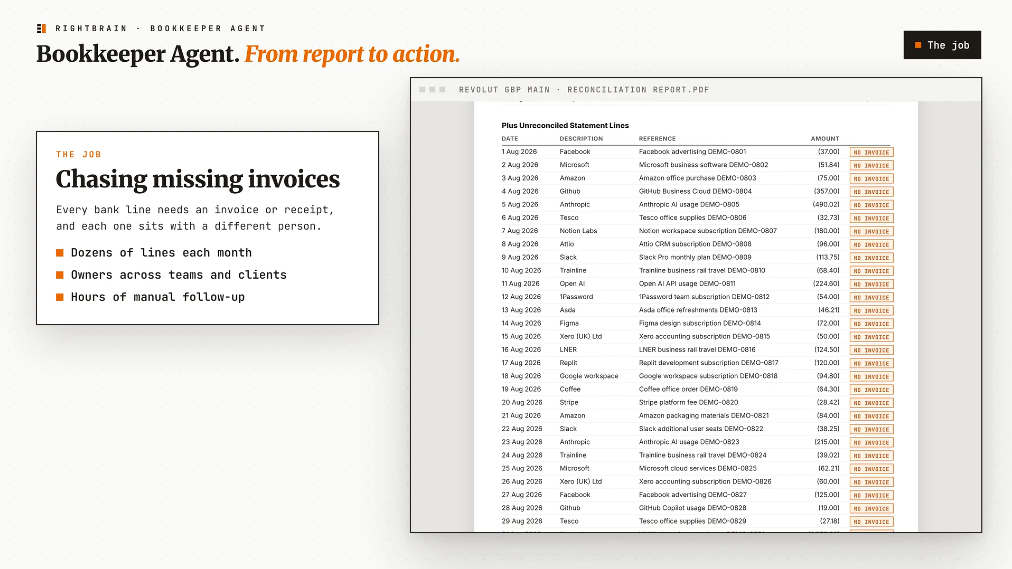
Reconciliation ends the same way each month: a list of bank lines with no document attached, and each one belongs to a different person. These often sit with different colleagues and clients. Dozens of lines, owners spread across teams and clients, hours of manual follow-up before the books can close.
The first attempt is familiar. Open the report, filter by supplier, work out who each line belongs to, write the email, repeat. It works, and it costs an afternoon every time. For an accountancy firm, that afternoon arrives once per client.
Start with the report
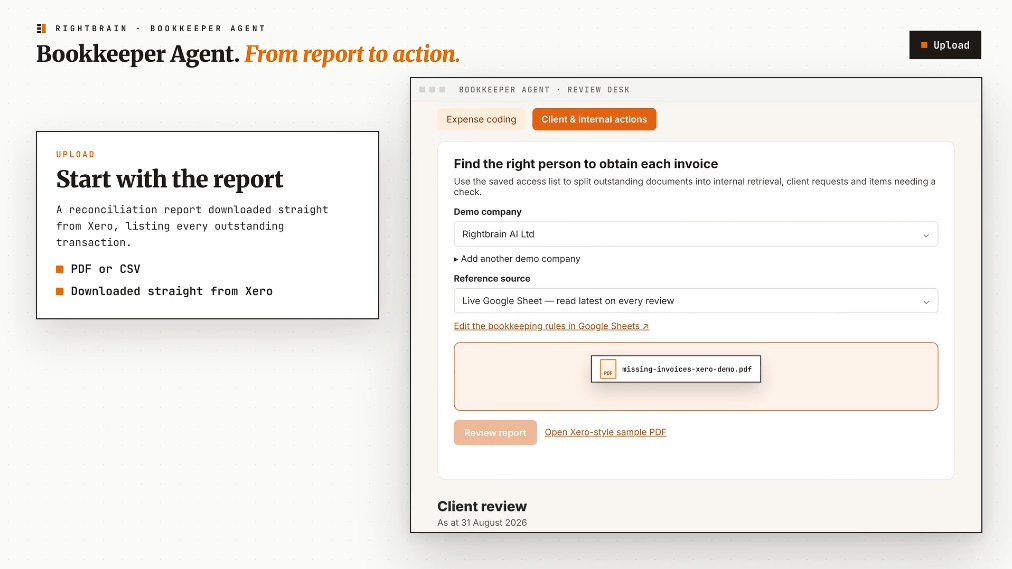
Download the reconciliation report from Xero, the one listing every outstanding transaction, as a PDF or CSV. Drop it into the agent, choose the company it belongs to and select ‘Review report’. A practice with several clients can add each company in turn and keep each client’s data separate.
Check it against your responsibility list
The agent checks every transaction by supplier name against a saved responsibility list. The list lives in a Google Sheet, read fresh on each review, so an edit made today applies to the next report. Each supplier has an owner (the client or the internal team), a named contact and an action, such as ‘ask the client’ or ‘retrieve internally’.
New supplier, change of owner, different contact: update the sheet and carry on. The rules stay in one place, and anyone on the team can read them.
Split by owner
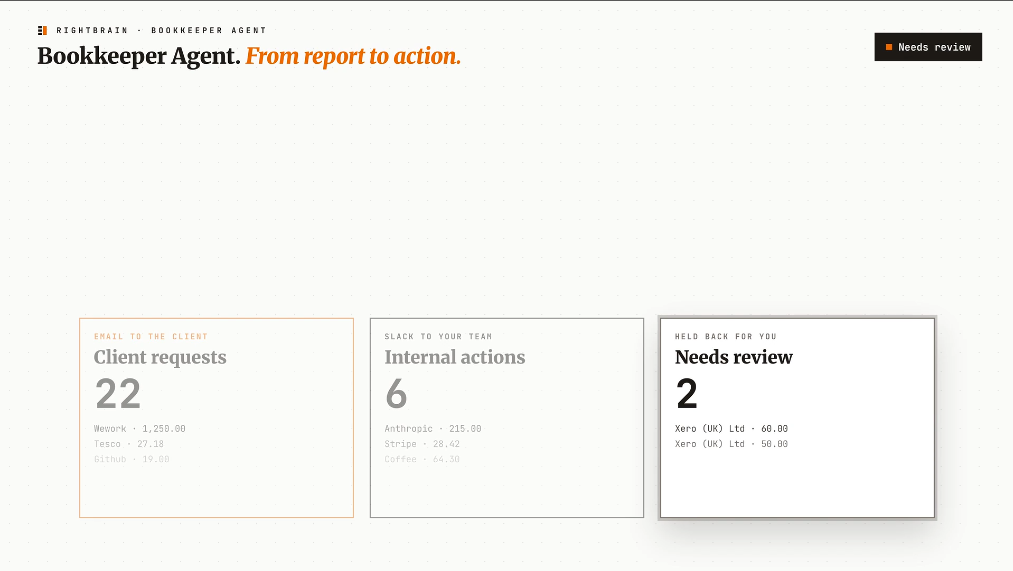
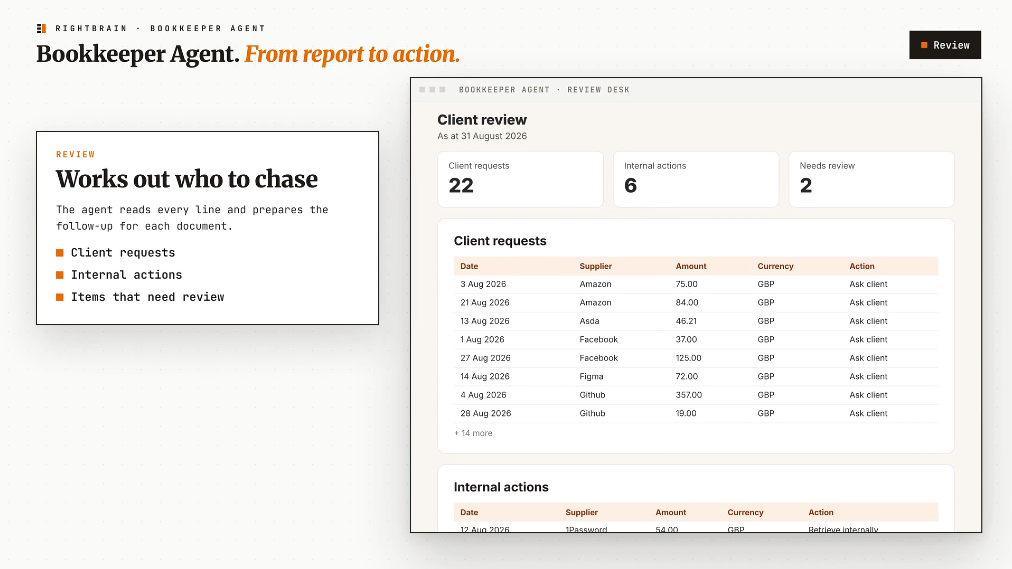
Every line falls into one of three groups. Client requests become an email to the client contact. Internal actions go to the right colleague on the internal communication platform, like Slack or Teams. ‘Needs review’ takes the rest and is held back.
The third group matters most. Anything the agent cannot confidently assign is held back for review. In finance, a confident guess costs more than a gap, and an agent that holds back what it cannot place is one you can trust with everything else.
Draft follow-ups ready to send
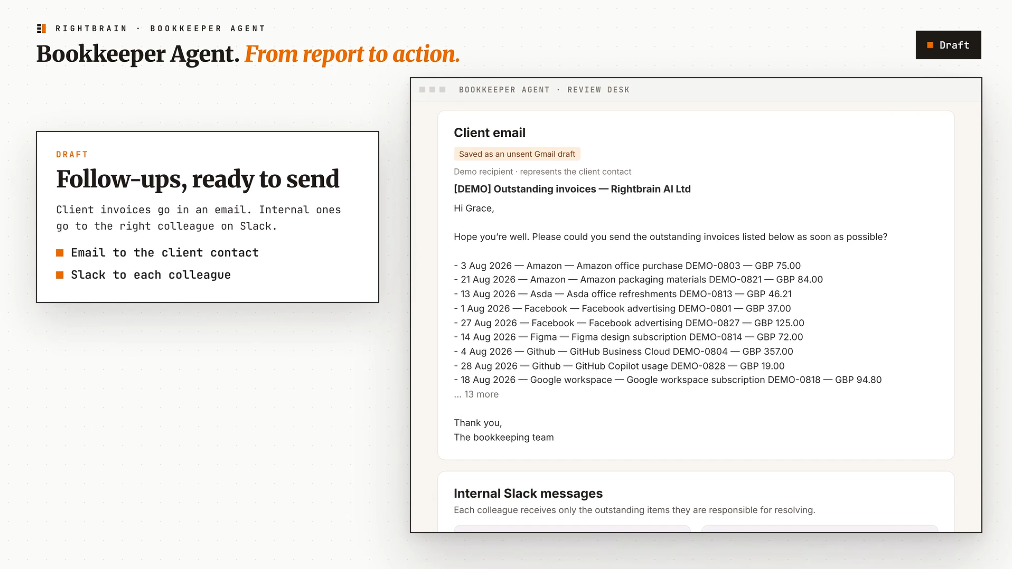
The client email is saved as an unsent Gmail draft, listing each outstanding line with its date, supplier, description and amount.
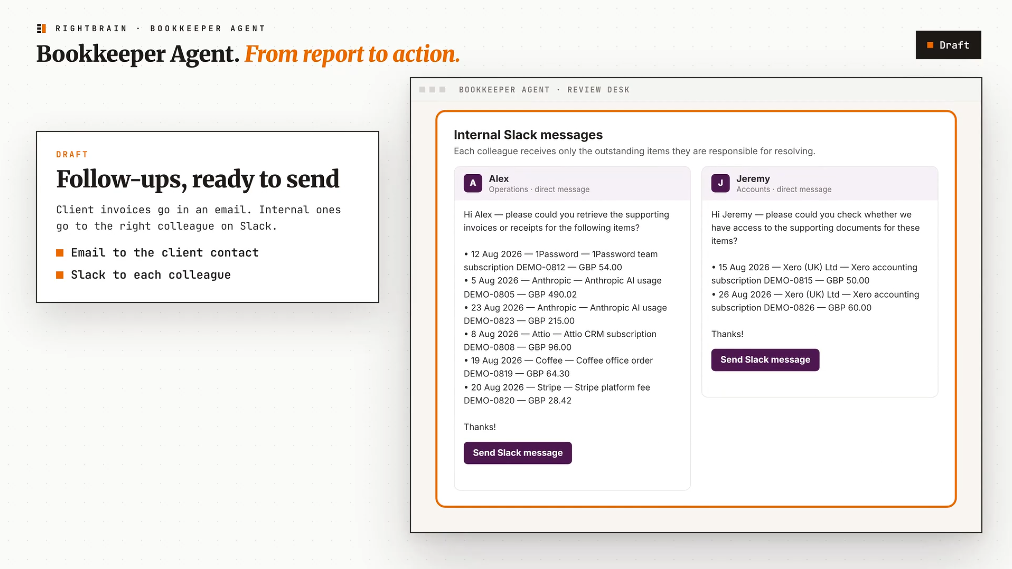
Internal messages work the same way, with one refinement: each colleague receives only the items they are responsible for. The message to a colleague in operations lists their lines and nothing else.
Review and send; nothing goes until you have checked it
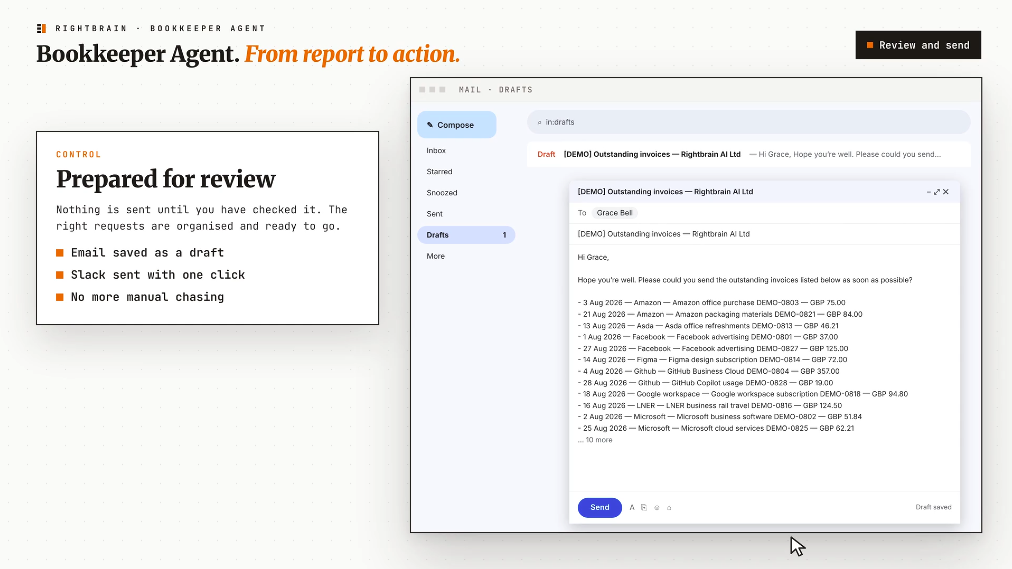
Everything is prepared for review before it is sent. The email waits in Drafts to read, edit and send. Each internal message goes with one click once you are happy with it. The right requests arrive organised and ready, with no need to work down the report chasing people one by one.
The agent does the sorting and the writing. A person keeps the review and sends it.
Configure it for your finance setup
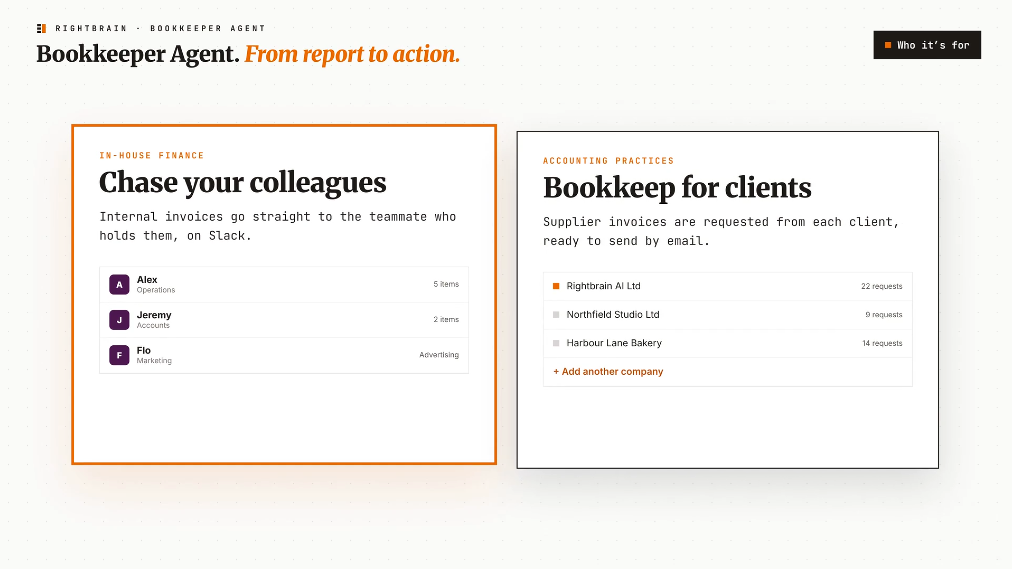
Accountancy firms get the biggest lift. Bookkeeping for clients means a missing-invoice list per company, each needing a polite and precise request from the firm's own inbox. The agent reads each report, splits the lines between client and team and prepares every follow-up ahead of the deadline.
Internal finance teams at service firms get the same relief closer to home. Invoices sitting with colleagues go straight to the person responsible in internal communication, like Slack or Teams, so finance stops chasing the building one message at a time. This agent is already used internally to chase colleagues for missing invoices.
The bookkeeper still owns the books. The agent does the chasing.
Run agents on a real runtime
Get in touch and see the tracing, replay, and resilience that make agents production-ready.